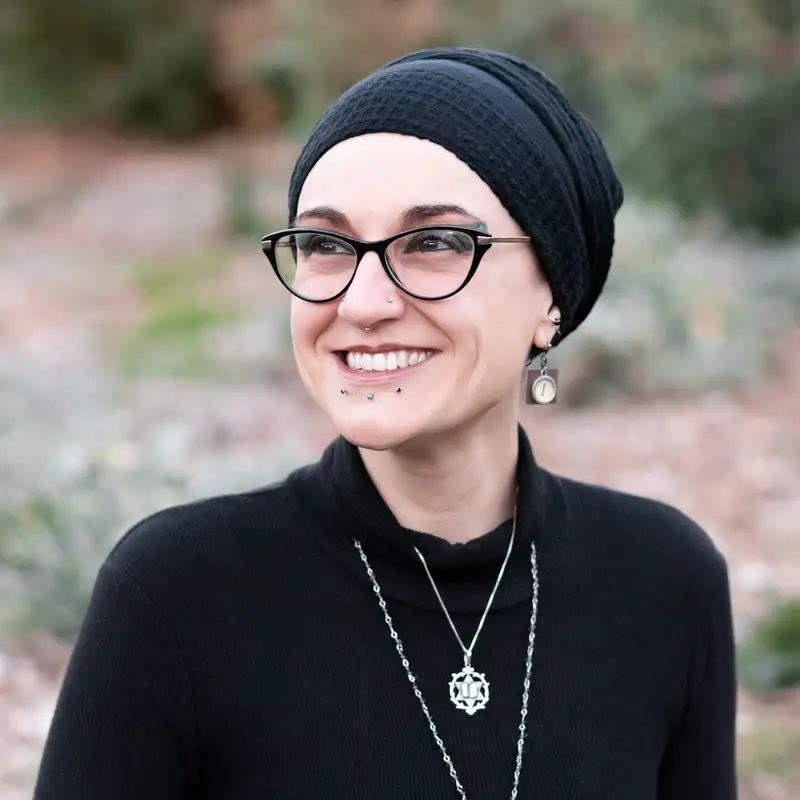
And you are listening to The Academic Verdict, the official podcast of academicabuse.com. This is Julie Cruse, and I'll be giving you the latest headlines of academic abuse from the trenches of higher education. Let's get on with the dispatch. We're doing something a little bit different today. Normally, I interview guests anonymously for their safety and ours, but today, we're very grateful to have our first non anonymous guest and author of a wonderful book I highly recommend called Studies in Lechery.
Julie Cruse:And her name is Cal Louise Phoenix. So thank you for joining us today, Cal.
Cal Louise Phoenix:Thank you for the opportunity. It's an honor.
Julie Cruse:I'm so glad to have you here. For those of us who are listening at home, would you like to share just a little bit about yourself?
Cal Louise Phoenix:Sure. I'm a native of Kansas. I still live here. I have an academic background in English creative writing and sociology, and I'm also a licensed substance use disorder counselor with the state. I'm married.
Cal Louise Phoenix:We just recently bought a house, which is quite exciting. And we've got our two cats. We're looking forward to adopting a third once we've moved.
Julie Cruse:Thank you. So for everyone at home who has not yet read Studies in Lechery, which once again, I highly recommend that you pick up this book. Cal, tell us what it's about.
Cal Louise Phoenix:So Studies in Lechery describes my unfortunate relationship with, a man by the name of Jack, doctor Blair, who was my academic adviser and sociology professor. He seduced me just before my final semester in undergrad, and what followed was about a an eleven month on and off relationship that was deeply abusive. I later discovered that he had been simultaneously pursuing and dating other students and faculty, had had a pattern of doing so for a long time. So I I detail my efforts to report him and to seek some kind of institutional consequences. And then there's some additional information regarding the impact of that on myself, my life.
Cal Louise Phoenix:And the format of the book is a little strange. It's broken into four parts. The first two parts are my diary entries, and these are my actual diary entries that I was writing as these things were happening to me. And these entries have been, of course, edited down for clarification, for ease of reading, but at their core, they are still my diary entries. And then third part that follows is a research narrative that contains seven subsections of research and are really there to outline and scientifically describe what happened to me, and what happens in these situations, and the greater implications.
Cal Louise Phoenix:So it starts out with describing errors of cognition. So things that we as human beings are psychologically kind of wired toward and like, how these mechanisms can contribute to ending up and then staying in abusive relationships. And from there, I kind of so I I start with with the sort of internal experience. Right? So these errors of cognition, the impacts of manipulation and psychological abuse, what that looks like.
Cal Louise Phoenix:And then I go into a conversation about consent and coercion. Mhmm. I make the argument that I was raped. I did not consent to this relationship. I was unable to provide consent because this was an individual who had power over me and had also used deception to manipulate me into, quote, unquote, consent.
Cal Louise Phoenix:And then from there, I go into sort of a brief exploration about whether or not he might be classified as a psychopath. And then what does obedience to authority look like? How does that how does that bias play out in these situations? What is the research on that? And I make the argument that professors are helping professionals just like lawyers, law enforcement, teachers, secondary grade school teachers, counselors, and therapists like myself.
Cal Louise Phoenix:There's a lot of roles that they fill that overlap with those different occupations. So why aren't they held to to the same ethical
Julie Cruse:standards as individuals in those career fields? Why
Cal Louise Phoenix:And and I make the argument that they should. And then finally, I I discuss what little research I could find about the what what information is available about student professor relationships, their impacts, what students believe about their efficacy, and what kind of policies and procedures should be in place.
Julie Cruse:What inspired the experimental form of your book with the blend of traditional narrative and diary entries and research?
Cal Louise Phoenix:Necessity. Quite honestly, I one of my first sort of beta readers, a friend of mine, she read it over, and she said, I there there's a a short sort of, like, creative writing exercise, memoir creative writing exercise that I included in my diary almost as an explanation of what had been going on. And my friend pointed to that, and she said, that is so good. I want the whole book to be that. Mhmm.
Cal Louise Phoenix:And I said, I absolutely can't do that. Emotionally, intellectually, I there there was no way for me to start from the beginning and craft my experience. And I didn't feel that it was necessary because I had the diary. I had this record. And while it's not a traditional form for creative writing, it is still written by an author.
Cal Louise Phoenix:It's it's written by a writer who's had this training. So I knew it could be interesting, and I knew it could be compelling. But more than that, I wanted my readers to experience what was happening to me as it happened to me, to to to almost imitate the experience I was having as they're themselves reading it. You know, I I start the re the research section with a quote by David Shields, and he says that I'm not interested in myself per se. I'm interested in myself as a theme carrier.
Cal Louise Phoenix:And that was really it. Like, I'm just one person who's gone through this experience, and I absolutely know that thousands of students in higher ed have had these experiences. And it's not so much about me, but my experience can provide some clarity in terms of, like, what these mechanisms look like.
Julie Cruse:How did you conduct your research sections of the book?
Cal Louise Phoenix:Thankfully, most of the time that I was working on it, I was still enrolled as a student. As as I mentioned later, I did reenroll to pursue my license in substance use counseling. So because of that, I had access to a lot of those subscriptions for certain databases where you could better access scholarly literature studies. But, you know, my university didn't pay for everything, so I ran into a lot of paywalls. And when that would happen, I was really lucky to have really, really good friends who were either employed in academia or were students themselves in other institutions that were willing to give me their logins so that I could bypass some of these paywalls and and access this research.
Cal Louise Phoenix:But even doing that, I know there was possibly more out there that I was unable to reach because, you know, this information is is difficult to to get ahold of. You have to be very, very rich or be very connected to a lot of institutions and higher learning to access as much as you want.
Julie Cruse:How long did it take you to write, edit, and publish Studies Lechery?
Cal Louise Phoenix:Three years, a little less than pretty intensive writing, editing scholarship. And I started submitting to indie publishers in December 2020. A terrible timing, but we didn't know about COVID, how long that was gonna go on. But I had to take a lot of breaks because of the psychological impact of the experiences. I do have PTSD.
Cal Louise Phoenix:There were times when I would write or edit myself into dissociative episodes, and my my brain and body would literally force me to stop writing. And sometimes those breaks would last two weeks. Sometimes they lasted three months. And then from 2020, I think I signed my contract with Atmosphere in I think it was the 2023. All considered, it was pretty quick.
Julie Cruse:So you touched a little bit on the emotional impact of the work. Is there anything you'd like to add to that?
Cal Louise Phoenix:You know, just doing this interview, and putting myself in a position to to talk about it is so nerve wracking. I was just telling my husband about 01:30. I just started pacing around the room. And it it's it's not because I have any concerns about talking to you about anything. It's just talking about this subject.
Cal Louise Phoenix:It's it's triggering. It's triggering beyond belief. Yeah. And then, you know, you have those days where you feel more empowered than others. Like, I can fucking do this.
Cal Louise Phoenix:I can talk about whatever I want.
Julie Cruse:Exactly.
Cal Louise Phoenix:And then you have those other days where it's like, I don't want to be anywhere near this subject. I don't wanna open myself up to that. So I think I just vacillate between those two perspectives a lot with this. It's challenging. One of my one of my partners, I mentioned him in this book, if you won't mind me saying, Bevel.
Cal Louise Phoenix:He is an Air Force veteran. He did, I think, a total of four tours during the war on terror, and he is one of the only people that I can talk to who completely appreciates my my symptoms. And I just think that's so strange, but also it makes a lot of sense. PTSD, it doesn't it doesn't necessarily matter what the specific circumstances were. It doesn't matter what the specific trauma was.
Cal Louise Phoenix:The thing that binds us is that we share these symptoms. But what the the thing that's funny to me about it is that this is somebody who literally went to war. You know? He was involved in combat. He saw absolutely heinous things.
Cal Louise Phoenix:And I was raped and abused by my professor. But I live with the same experiences as someone who was in combat for years.
Julie Cruse:Yeah.
Cal Louise Phoenix:I mean, I'm grateful to be validated and loved by someone like that, but at the same time, doesn't it make you just so fucking angry?
Julie Cruse:Why is it that I went through these horrific things in childhood, but they're not the things that I have nightmares about?
Cal Louise Phoenix:Yeah.
Julie Cruse:It's the things that I went through in higher ed that I have the nightmares about. Why is that?
Cal Louise Phoenix:Yeah. You know?
Julie Cruse:And really the only sense I can make of it is that up to 18, we're constantly told that higher education is the way out.
Cal Louise Phoenix:Yeah.
Julie Cruse:And then to have such intimate violations occur in that space that, again, we're conditioned most of our lives to believe is not only safe, but that is going to propel us toward safety in the for the rest of our adult lives. It's so much more damaging for me. That's how I that's how I felt about it.
Cal Louise Phoenix:I am so appreciative of you sharing that because I feel exactly the same way. I really do. Like, I don't have nightmares about my childhood. I don't talk about my childhood in this book, but it wasn't fabulous. But but you're right.
Cal Louise Phoenix:Like, I don't I don't have those I don't have those nightmares. I don't have the same amount of involuntary responses to that, but I do have them about what happened in college.
Julie Cruse:Well, there that makes two of us.
Cal Louise Phoenix:Yeah. No. Absolutely. I completely relate to that. And I think, you know, as you were as you were talking, I think it goes into that idea I touched on about betrayal trauma.
Cal Louise Phoenix:And I think the the normalization of childhood trauma you know people who had difficult childhoods, an an abusive parent or sibling or, you know, they grew up in, like, chronically stressful situations or had poverty or whatever. You know, those things that can impart traumatic reactions on you over time. Right? So so you kind of expect that you could be or will be or were traumatized in childhood by a parent or a caregiver or, you know, whatever it was. You don't expect that from a teacher, from a professor.
Cal Louise Phoenix:You don't expect that in career building, in life training. Right? You don't expect that in these settings. And I think the the betrayal there is the thing that could potentially make it all the more traumatizing. Like, I spent so much fucking time and and effort, and I put so much labor into this thing.
Cal Louise Phoenix:And I spent so much money. And I'm walking away from this with, yes, I have degrees, but I also have a lot of debt, and I have PTSD. You've completely reshaped who I am as a person. You have added tiny ruptures throughout my psyche that I now have to work on patching. What?
Cal Louise Phoenix:For for the privilege of having been educated? It's devastating.
Julie Cruse:You have lost your consent in that situation. You've lost your boundaries in that situation, and then you've also lost the letter of recommendations.
Cal Louise Phoenix:He destroyed my need to even ask for one. I did not pursue a master's degree after what happened to me. I couldn't fathom I couldn't fathom doing that.
Julie Cruse:Exactly.
Cal Louise Phoenix:And doctor Blair's particular flavor of abuse was unconditional positive regard. So just a lot of love bombing. And it was very he's again, I make the argument in the book, but psychopathic. He played the long game for six years, very subtly manipulating me and grooming me and negotiating me into a position where by the time he seduced me, I had only one semester left with him. So it was almost as if, like, well, you have to do this.
Cal Louise Phoenix:Because if you don't, you are completely and utterly fucked.
Julie Cruse:What impact do you hope the book will have on your readers and also, hopefully, on higher education?
Cal Louise Phoenix:One of the things I ran into a lot was sex or gendered specific language in some of the research. And I really made an effort to to edit around that to ensure that any person could read this regardless of their sex or gender identification and relate to it. And I also wanted survivors of any kind to feel that they could benefit from reading this book and be validated by it, even if their trauma did not occur in higher ed. So my hope is literally anybody who stumbles upon the book and decides to give it a try, to give it a read, could benefit from the content. But ultimately, you know, it is about my experience being sexually exploited in higher ed.
Cal Louise Phoenix:So is students and faculty who I hope would be the primary readers of this text, and for that to influence their journeys in those spaces. You know, as a student, you know, learn from my experiences. But as faculty, learn from my experiences, have those ethical boundaries, and follow them. Follow them to a t. It's not hard.
Cal Louise Phoenix:I don't know. I do it every day, every day at my job. I I'm a licensed counselor. I have to follow an ethical code. And I do it every day.
Cal Louise Phoenix:And it's not hard, especially because I know that by following these ethical boundaries, I'm not only keeping myself safe, I'm keeping my clients safe. And why on earth would I have gone into this field? Why on earth would anyone go into a helping field if you don't want to help? You know? And and so, ultimately, it's that.
Cal Louise Phoenix:But I also I must say that I don't feel it's the responsibility of individuals to make the changes. It's the responsibility of the institution to make the changes and not individual institutions. Like the field of higher education, the overall institution, academia as a whole, really needs to collectively collaborate on policies and implementation of appropriate policies with appropriate sanctions when they're violated. Otherwise, it's just individual persons or individual colleges or universities screaming into a void. And that's completely unfair because a student in Kansas is no different from a student in Washington or California or Massachusetts.
Cal Louise Phoenix:Right? So there there needs needs to be an overall just perspective shift. You know? One of one of the things I point out in the book is if you look at the code of ethics for gosh. What's that called?
Cal Louise Phoenix:The Association of University Professionals or Professors. I can't remember the specific name. I apologize. But, you know, when you look at their code of ethics, there's nothing in there about this specifically. And why not?
Cal Louise Phoenix:Why not? There is for literally every other code of ethics for any other kind of helper. They don't want it in there because they either, a, don't wanna believe this is happening, or, b, they wanna continue for it to happen because it's this it's almost like an additional privilege they get for reaching those positions, you know? Like what I quote doctor Blair saying in the book. One of the good things about becoming a professor is you get to fuck your students.
Julie Cruse:So I've started a a title nine petition hoping to change the federal law so that there are anonymous complaint pathways. Mhmm. You know, we're afraid of retaliation, and mandatory reporters are afraid of retaliation, and witnesses are afraid of retaliation. Universities are afraid of losing funding when they do the right thing. You know?
Julie Cruse:So there's, like, a lot of things that are going on that allow these things to persist. What do you think about that?
Cal Louise Phoenix:I support what you're saying. I signed your petition. When I was looking it over, I had a thought about again, I'm I'm I'm a mandatory reporter. And, you know, I I have only been fully licensed for about five years, and I can't tell you how many times I've had to put on my mandatory reporter hat and call the cops or file a file something with, you know, our version of CPS because of alleged child abuse or abandonment or neglect. And I can do that.
Cal Louise Phoenix:I have the option to do that anonymously. And I don't always because it doesn't usually matter that much, but it's so nice that I have the option to do that anonymously if I'm concerned about the circumstances of making that mandatory complaint or making that oh, not a complaint necessary, that mandatory report. So it's important. It's important to have that option there, especially for survivors who are still on campus, who might have months or years of school ahead of them. What a terrifying prospect, you know, to to say, like, I I need to make this report.
Cal Louise Phoenix:But in doing so, I might I might really, really, really end up harming myself more than I've already been harmed.
Julie Cruse:Yeah. What would you tell survivors who are currently navigating what scholar Anne Jay Lane calls academia's dirty little secret?
Cal Louise Phoenix:It depends on the student. If it's a student who knows in their gut that what is happening isn't wrong, I would encourage them to go to the head of their department. And I'm not saying that the way that I happen to go about making my reports was the best way, but I think it made the most sense in terms of how most institutions are structured. So I went to the head of my department first and foremost because I felt like he needed immediate accountability. And who better to do that than the department head who's right there?
Cal Louise Phoenix:Generally, share office suites. Right? They're in the same floors together. And tell them what's going on. But don't stop there.
Cal Louise Phoenix:Right? Keep going. Tell everybody. Talk to human resources. Talk to the title nine coordinators.
Cal Louise Phoenix:File those reports. And don't stop talking until something changes. It's so much easier said than done. I absolutely know that. I went through it.
Cal Louise Phoenix:But if you care about leaving that situation and feeling as though you did what you could, it's kind of what I think has to happen. It would be nice if college has made that process easier for survivors. Because that's a lot of work, and it's it's gut wrenching to tell your story over and over and to share your fears like that over and over. But they need that immediate accountability at the bottom. And because anything that comes from the top and trickles down, I think it loses its sense of emergence, its viability.
Cal Louise Phoenix:Right? When you're hearing from somebody who generally works in a completely different part of the college or university campus, who is not in your purview a lot, you don't have a lot of interaction with, for them to suddenly walk over to you and say, oh, hey, by the way, there's this thing going on I've heard about. You know, you need to figure this out. Are you gonna take them as seriously? You might not even know the student in question.
Cal Louise Phoenix:But if that student goes to the department head and shows their face and says, here I am. I'm a real person, and this is what I'm going through. And by the way, I'm gonna continue to talk about this until something's done. It's hard. It's so hard, and it should be easier.
Cal Louise Phoenix:But that is based what I would suggest they do. But that is for students who believe in their gut that what is happening to them isn't isn't acceptable. And like I say in my book, I do acknowledge that there are students who are in these these relationships who don't feel that what's happening to them is wrong. And and I wanna validate that. Like, your individual experience is yours, and you have every right to derive whatever meaning from that.
Cal Louise Phoenix:But I would encourage them to truly, truly examine how they feel when they're with that person. Do you feel equal to them? Is there an inherent passivity in your interactions in what you say? Are you holding back? Are you are you unable to be your fully authentic self with that person because you fear judgment?
Cal Louise Phoenix:You fear rejection, reprisal. And if and if that's the case, is it worth analyzing and thinking about whether or not this relationship is healthy? Because in any relationship I've been with a peer, I've not had those fears. I've not feared judgment or reprisal in the same way that I have with my professor. If a peer doesn't like me or I'm worried about them judge well, fuck you.
Cal Louise Phoenix:Date somebody else.
Julie Cruse:Exactly.
Cal Louise Phoenix:You can't say that to somebody who could influence your upward mobility in life, who could influence your ability to get into the next program or the job or whatever it is, if you wanna continue your education beyond whatever the level is that you're at. If that's a sense of fear there, that's is that healthy? Is that okay? Think about that.
Julie Cruse:What can listeners at home do today to support survivors?
Cal Louise Phoenix:The easy answer is to just believe us. I just wonder how much how different would it have been if I didn't have to explain or convince people that what happened to me was bad. You know? And and I know it's kind of it's become a bit of a cliche over the years, you know, believe survivors. But not all cliches are bad.
Cal Louise Phoenix:Sometimes they're incredibly helpful. Lord knows. I'm a recovering alcoholic. You wouldn't believe how many, like, cliches from AA or NA I use on the daily basis in my work. But believing us would be nice.
Cal Louise Phoenix:It would be nice.
Julie Cruse:Yeah. As, like, a starting point. As, like Well Step one in a 12 step process. Believe us. But
Cal Louise Phoenix:I think I think if if this were if this were a 12 step process, number one, fucking believe us is the starting point because this has only been allowed to happen for as long as it has, because, a, people refused to believe it was happening, and then, b, when they did recognize it was happening, they refused to believe it was problematic.
Julie Cruse:Exactly.
Cal Louise Phoenix:So, mean, I think it starts with that. But again, I'm not a huge believer in individuals doing the work of institutions. I'm a believer in institutions doing the work to protect individuals. It doesn't mean I fit into American society very well. As I mentioned in my book, America is reactionary.
Cal Louise Phoenix:We're not preemptive when it comes to issues or complaints or social discontentment or trauma for that matter. But there are a lot of us now who are trying to do this work. And this work started because we believed in ourselves, and we believed in the individuals that we knew who had gone through this or something similar. That work can only come out of a belief that this is a problem, and it needs to be addressed. So, yeah, it's a it's a silly cliche, but silly cliches have kept me sober for almost twelve years.
Julie Cruse:I think I would add to that. So if this were a 12 step process, I don't know if I can flesh out all 12 steps on on the spot. One thing we can do today is believe survivors. And I think another thing we can do is take two minutes. Go to academicabuse.com.
Julie Cruse:Sign the title nine petition. That's right there on the home page. Because the civil rights laws aren't likely to change until we pressure our representatives, until we, you know, contact them and advocate for ourselves. So that is something that individuals are gonna need to do, and unfortunately, representatives are gonna need to do. Yeah.
Julie Cruse:But past that, people individuals who are part of higher ed that are mandatory reporters should report if they see things. You've got to, at some point, understand that things that are against policy are against policy for a reason. You know, it's not like it's not all and I think in higher ed and I know we're way over time, so I'll try to try to close. But in higher ed, there is such like a I wanna say, especially in certain types of departments, particularly creative departments, fine arts and, you know, maybe even tech tech bro kind of departments. And, you know, that it's like an anti corporate kind of environment.
Julie Cruse:Everything's a little bit more familial, a little bit more familiar. People are more cool. And, you know, we're all family here. So, you know, professors are they can hug the students, they can go to coffee with the students, they can drink with the students in a lot of cases and party with the students. And I've seen that happen.
Julie Cruse:And so when they what that they call that a more informal environment. Right? And if it's going to be informal like that, then, of course, you're gonna have professors who laugh off professors dating students, professors fucking students, professors threatening students. Oh, that's just Billy. He's just having one of Billy's days.
Julie Cruse:You know? Yeah. And I feel like that we really have to, come back to understanding that these things are against policy for a reason.
Cal Louise Phoenix:Yes.
Julie Cruse:And it's not being uptight to enforce it. It's not being uptight to perform your role as a mandatory reporter, to direct a student to resources like the ombudsman, the title nine office, human resources to say, here are your options. Let's talk about them. I won't make the decision for you, but I can walk you through the decisions available to you. There's nothing wrong with that.
Julie Cruse:That's not uncool.
Cal Louise Phoenix:This shit makes my blood boil. I I am a cool counselor. Ask any of my clients. Ask any of them. Right?
Cal Louise Phoenix:But I don't need to go hang out and be you know, to to, like, preserve my moniker as the cool counselor by, like, going out to coffee and, like, hanging out and going with my clients. Like, that's not what I'm here to do. You have friends. You have family members where you can do that. I'm here to help you.
Cal Louise Phoenix:That's what I'm here to do. I'm I'm here to help educate, support, and guide you in your journey of sobriety. Right? So if a professor is there to educate, support, and guide, then why can't you allow that to be what you do? And then if you wanna go out drinking and socializing, do that with your fucking peer group.
Cal Louise Phoenix:Why do you have to do that with a vulnerable population? Why?
Julie Cruse:Yeah.
Cal Louise Phoenix:Because students are a vulnerable population. They're figuring out how to be adults. They're figuring out what it means to be autonomous. Like, why do you wanna hang out and get drunk with them? That's so bizarre to me.
Cal Louise Phoenix:And it's so incredibly normalized, but again, it's like, but how did this become normalized? Like, I understand that there is a there is a drinking culture in college campuses and a partying culture and whatever. Sure. These are young adults usually who are exploring themselves. They're figuring out what their lives are gonna be like, and they're also very stressed out, so they're fucking letting their hair down.
Cal Louise Phoenix:That makes sense to me. Well, what then what's the professor's excuse? Why are you involved in that process with them?
Julie Cruse:Right.
Cal Louise Phoenix:You're not a peer. So I I just I've been doing this for almost six years now, and I don't understand why my ethical boundaries as a licensed counselor are so vastly different. But I'm still deeply, deeply enjoying my work. I'm in love with my job. It's beautiful.
Cal Louise Phoenix:It's so beautiful to do what I do and to impact these people's lives and to show them there's a better way of living, that there's more out there, and get them excited about growing and healing and learning. A professor does that too. But they don't have my phone number. I'm not on their social media. We're not going out together.
Cal Louise Phoenix:We're not hanging out together because that's not why I'm here. I'm not here to be your friend, your buddy, your lover. I'm I'm here to help you through a tough part of your life, and that's it. Yeah. So why why is that so hard for professors?
Cal Louise Phoenix:Why do you have to let your hair down in the same way as your students? Are you not trying to model a different kind of lifestyle? You know? Like, it's just bizarre to me. It's just so fucking bizarre to me, man.
Cal Louise Phoenix:I know. I know.
Julie Cruse:Well, I hope some of you professors out there are hearing this message tonight. Yeah. From here here you go. This is, like, straight from alumni at this point about what we really think now as adults of what was happening back then. That's that's what you're hearing right now.
Cal Louise Phoenix:Yeah.
Julie Cruse:So, hopefully, you won't be upset by getting some honest feedback from alumni at this point wherever you are. But once again, Cal, thank you so much for joining us today. Is there anything else you'd like to share with me or with listeners before we close out?
Cal Louise Phoenix:No. No. This has been wonderful. I I really, really appreciate, again, the opportunity to speak and and to support your work. What you're doing is so vastly important.
Julie Cruse:Thank you. This has been a one of a kind podcast session with miss Callowise Phoenix, author of Studies and Lechery. Thank you so much for being here and to be continued. You've been listening to The Academic Verdict. If you've experienced abuse in academia or have a story to share, email adminacademicabuse dot com or submit a tip anonymously at academic abuse dot com forward slash hashtag tip.
Julie Cruse:Remember, stay safe, speak up, like the match.